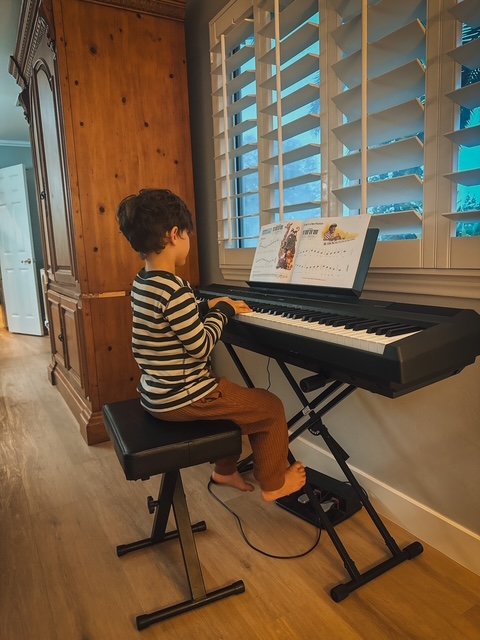
 Image 1 of 1
Cultivating Positive Work Ethic Through Awareness and Gratitude
By Diane Mitchell
If you have found your way to this corner of my website, chances are high that you’re a parent.
And if that’s the case, you have probably found yourself in many situations where you’re asking your kid to help clean up, take out the trash, take a shower or practice the piano; just to be met with a resounding “uhhhhh!”
In our home, we minimize these negative interactions by turning “work” into games. Below I offer some mindset ideas that you can use with your own children, but they work just as well for adults too!
_ _ _ _ _ _ _ _ _ _ _ _ _ _ _ _ _ _ _ _ _ _ _ _ _ _ _ _ _ _ _ _ _ _ _ _ _ _ _ _ _ _ _ _ _ _ _ _ _ _ _ _ _ _ _ _ _ _ _ _ _ _ _ _
Growing up, chores were always something we just had to do - no allowance, no reward. My motivation for completing chores and homework came from a place of fear, rather than purpose and it took me way too long in life to establish a positive relationship with chores and homework Finally through mindfulness practices, I discovered that when I approach tasks from a place of gratitude and opportunity, every-day life stuff feels more energized and vibrant. I hope to instill this mindset into my son so that he can grow up to acknowledge how approaching things in a positive and fun way can quite literally change your life.
Here are a couple of mindset practices we work on together:
Mindset/ Mantra #1: Turn “I have to” into “I get to.”
Whenever mind chatter creeps in, such as, “I hate laundry,” the first step is to acknowledge the negative thought. The next step is correcting the phrase by thinking “I get to do laundry.” Then I reflect on why this is a positive opportunity. For example, I might say a quick thank you, like “Thank you for these beautiful clothes,” or “I give thanks for the food, shelter and clothing that I am provided with.” Alternatively, I might reflect on the specific item that I’m folding. While folding my son’s shirts and sorting his socks, I might notice the size of the items and reflect on his age and how life is fleeting, fragile and beautiful.
It is quite amazing how these small changes in how we think can shift our entire perspective on the present moment and create positive habits. Try it and let me know how it goes for you!
Mindset/ Mantra #2: The whole point of life is to enjoy it!
Of course not everything that we do in life is going to be all rainbows and butterflies, but we certainly can try to make the best of things and create a little every-day magic!
When developing a reward system with my son, I wanted to make sure he knew that some tasks just need to be done and other things are worthy of a reward. We use a glass jar with colorful pom-poms of different sizes. When I notice that he goes above and beyond with something, he gets a pom-pom (the size of the pom-pom depends on my subjective view of the task). He also has a weekly behavior calendar at school, so when that comes home in the green, he gets a pom-pom for that as well.
When the jar is full he gets the option of going out to ice cream, or $5 (aka the Lego fund). Guess what he chooses 99% of the time? (Hint, hint, he LOVES Legos!)
Regardless of whether he is receiving a reward or not, I always make sure to acknowledge his effort. I think it’s important that our children are praised and feel seen. I also try to be really mindful of my language when I praise him. Saying, “Wow, that picture you drew is amazing. You worked really hard on that” lands better than “That’s really cool!” I try to be specific and say things like, “Hey bud, I saw that you took the initiative to change the roll of toilet paper. I really appreciate you noticing that and helping out.” Key words here: Initiative & Appreciate. Using this type of language helps to build emotional intelligence and self-worth, and shapes how they relate to others.
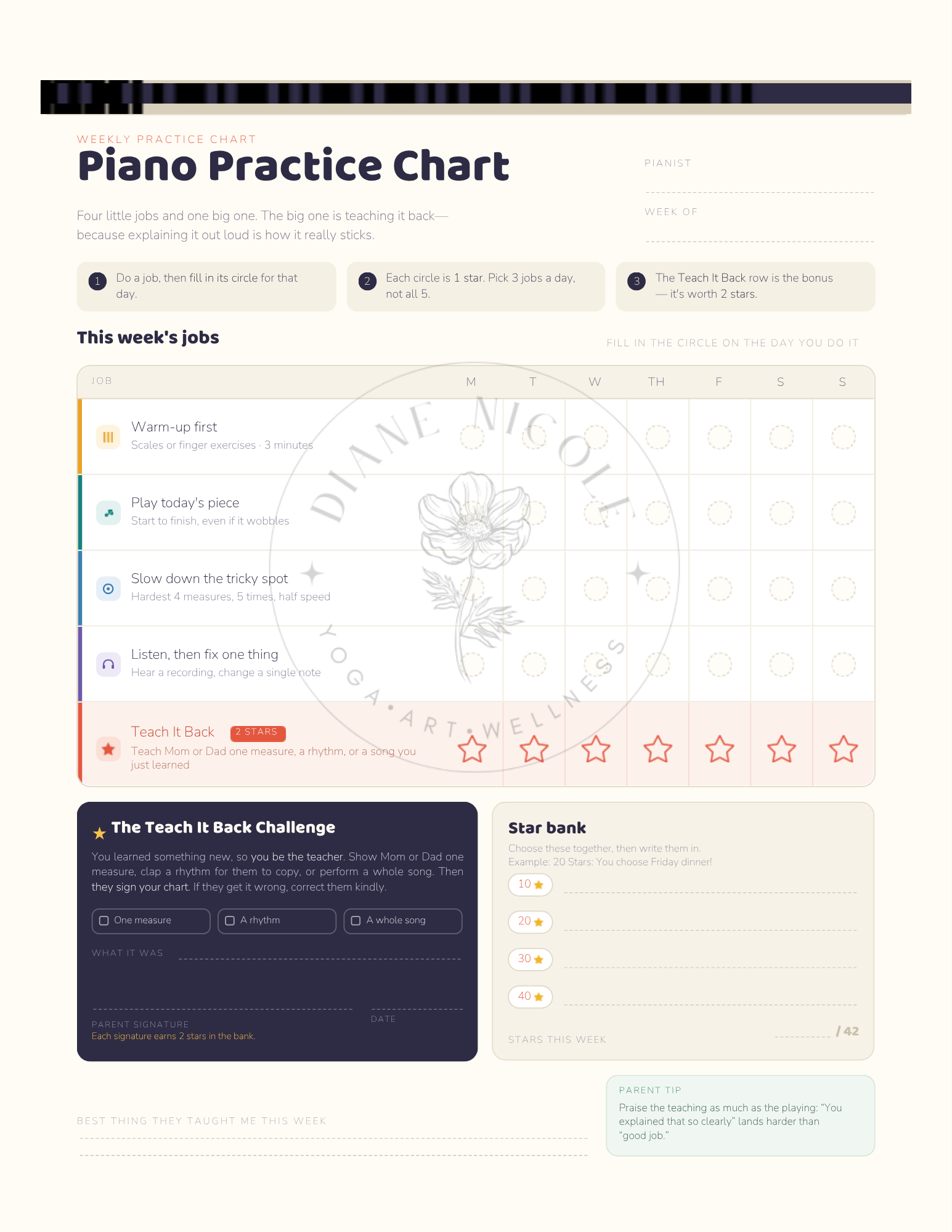
We have found that learning and chores are more fun when we approach them with teamwork, creativity and curiosity! …This is a very long-winded way to explain why I created this Piano Practice Chart, but there you have it!
I hope you find this guide helpful with your little one & cheers to the adventure of parenthood!